Product guide
Green Marble or Sukabumi Green Stone? Know Before You Buy
Green marble, green granite and Sukabumi green stone look alike at a glance but are different stones. Here is how they differ.
Five ways to use green stone in a kitchen, and the checks that stop an expensive mistake.
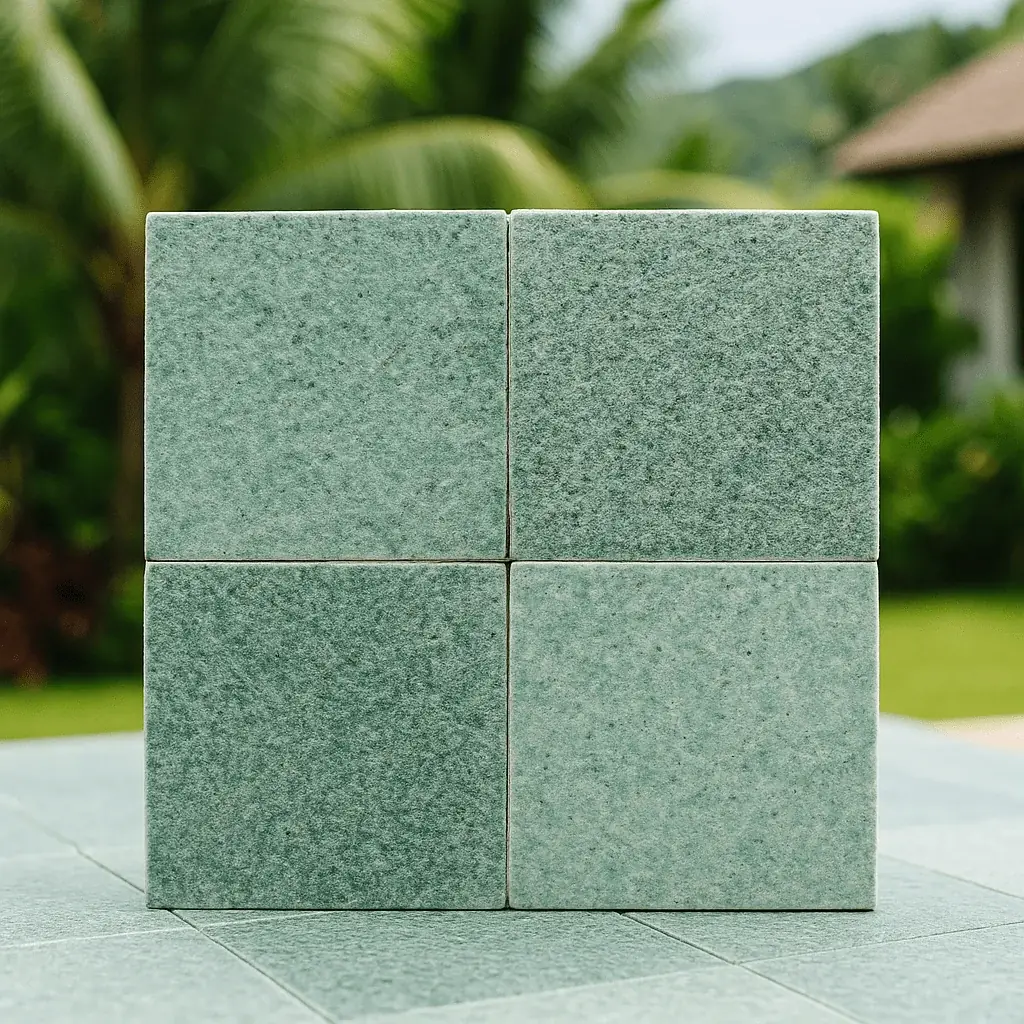
Green countertops look best when the stone, the finish and the cabinets agree. The five ideas below use green marble, green granite and green quartzite, and each comes with the one check that matters most.
Green marble gives a kitchen movement. A dark green with pale veining suits an island or a bar top, where it is seen more than it is chopped on.
General advice: Marble reacts to acids such as lemon juice and wine, so ask how it is sealed and cleaned before you choose it for a work surface.
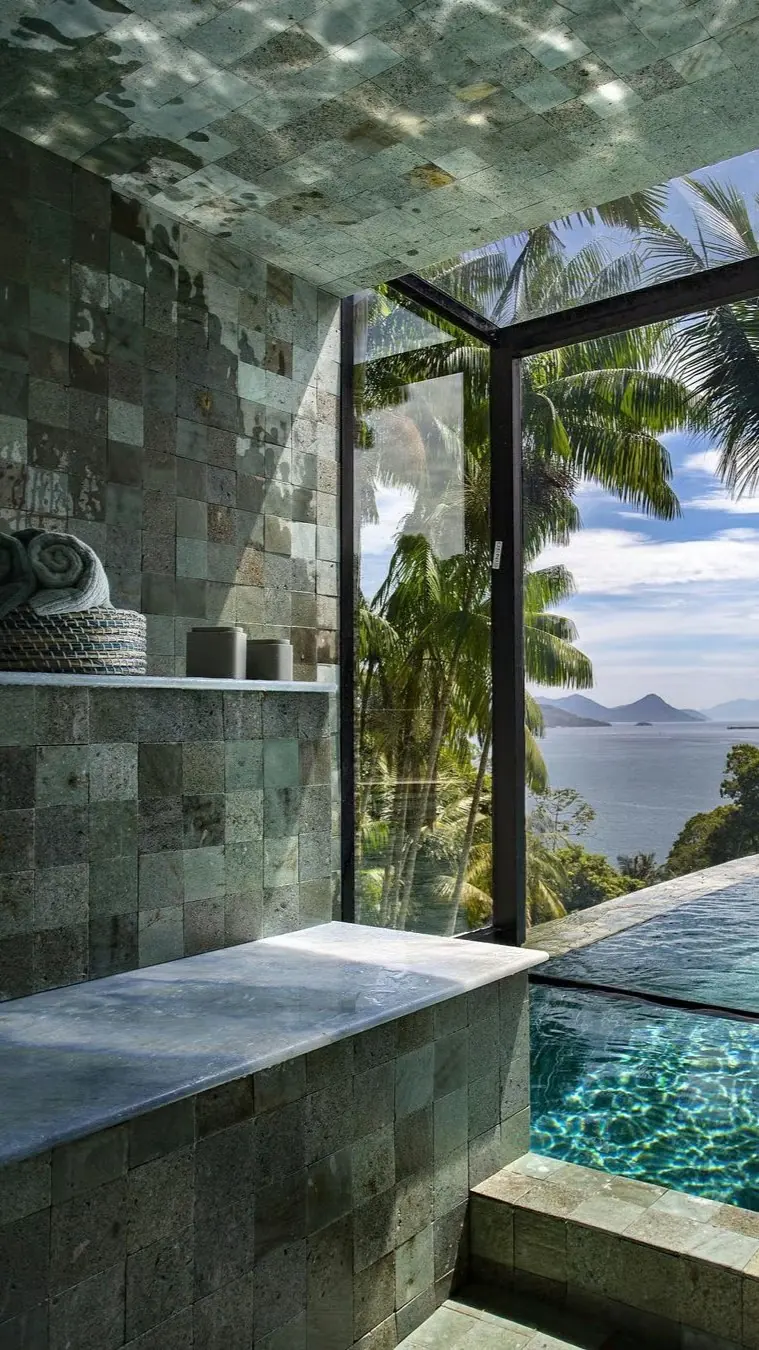
Green granite is a hard, speckled stone that copes well with daily cooking. It is a sensible choice for the main work run, next to the hob and the sink.
Ask for the actual slab, because the speckle and the shade differ from slab to slab.
A pale sage green keeps a white kitchen light and calm, and it hides more marks than pure white. Brushed brass or black handles add contrast without extra colour.
Dark green countertops look rich against oak or walnut cabinets. Light matters a lot here, so view the stone under your own kitchen lighting before you order.
If a full run of green feels like too much, use green stone countertops on the island only and keep the walls and cabinets neutral. It is the lowest-risk way to try the colour.
Green stone countertops are a long-term choice, so take your time over the slab.
General advice: Approve the exact slab, in person or by photo, before it is cut.
Our Sukabumi green stone is a quartzite (zeolite), listed as honed or sawn cut tiles and pavers. We list it for swimming pools, water features, spa and wellness areas and wet areas. We do not list it as countertop slabs.
Read how it differs from green marble and green granite, or send us your project details for a quotation.
Green marble, green granite and green quartzite are the common choices. Marble is the most delicate, granite is hard and speckled, and quartzite is also hard. Ask each supplier about sealing and care.
It depends on the stone. Harder stones such as granite and quartzite are easier to live with, while marble needs more care around acids. Ask how your slab should be sealed and cleaned.
No. We list Sukabumi green stone as tiles and pavers for pools, water features, spa areas and wet areas.
Polished stone looks deeper and glossier, while honed stone is matte and shows fewer marks. View both finishes on the slab before you decide.
Factory-direct natural stone from Sukabumi, West Java, with export documents.
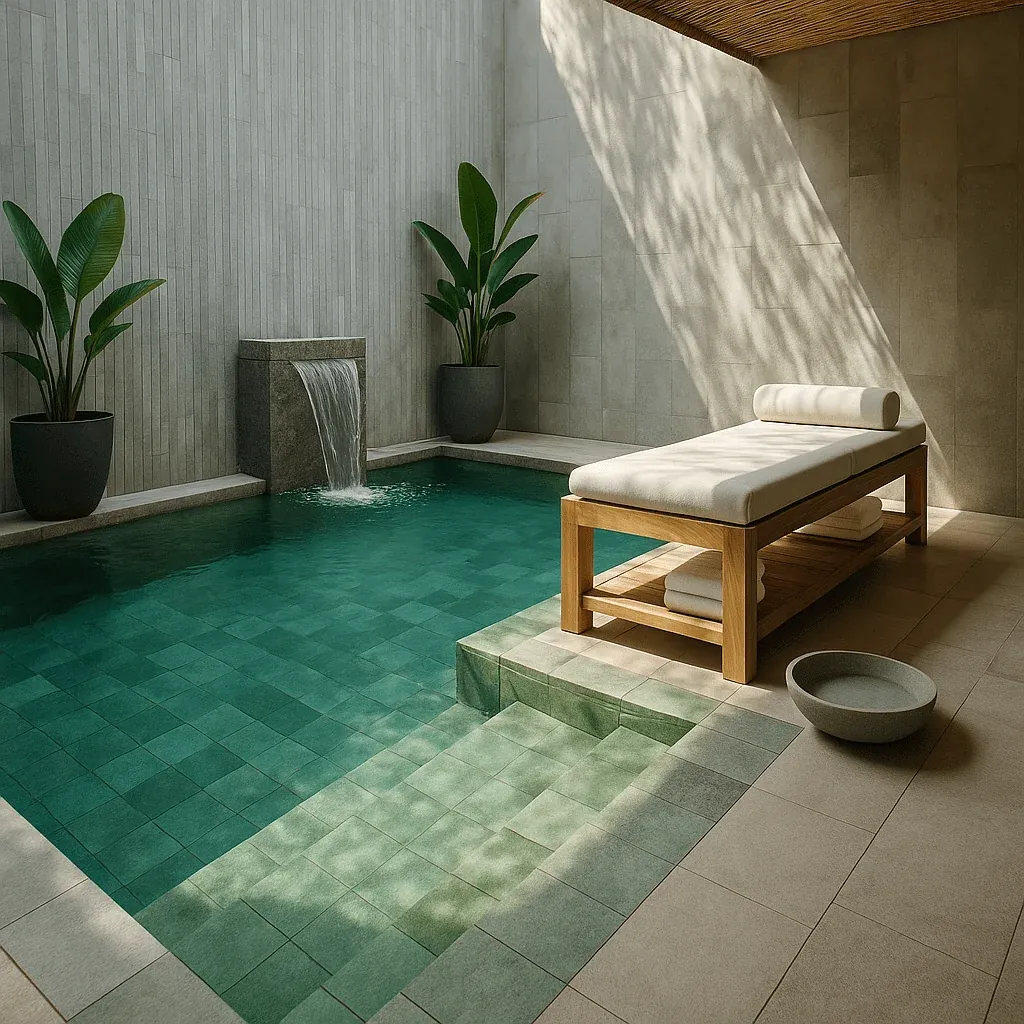
Quartzite (zeolite) in green shades, used for pools and wet areas.
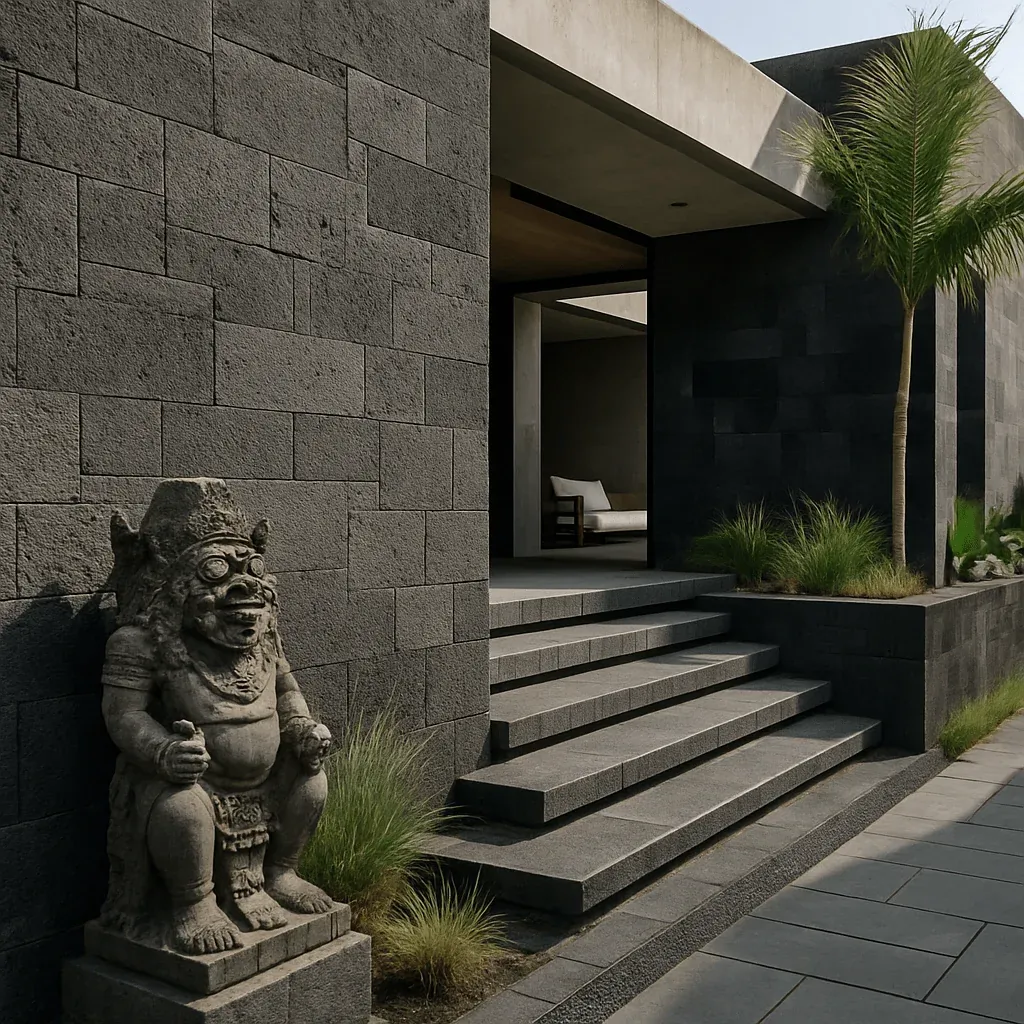
Dark basalt for pavers, wall cladding, landscaping and pool coping.
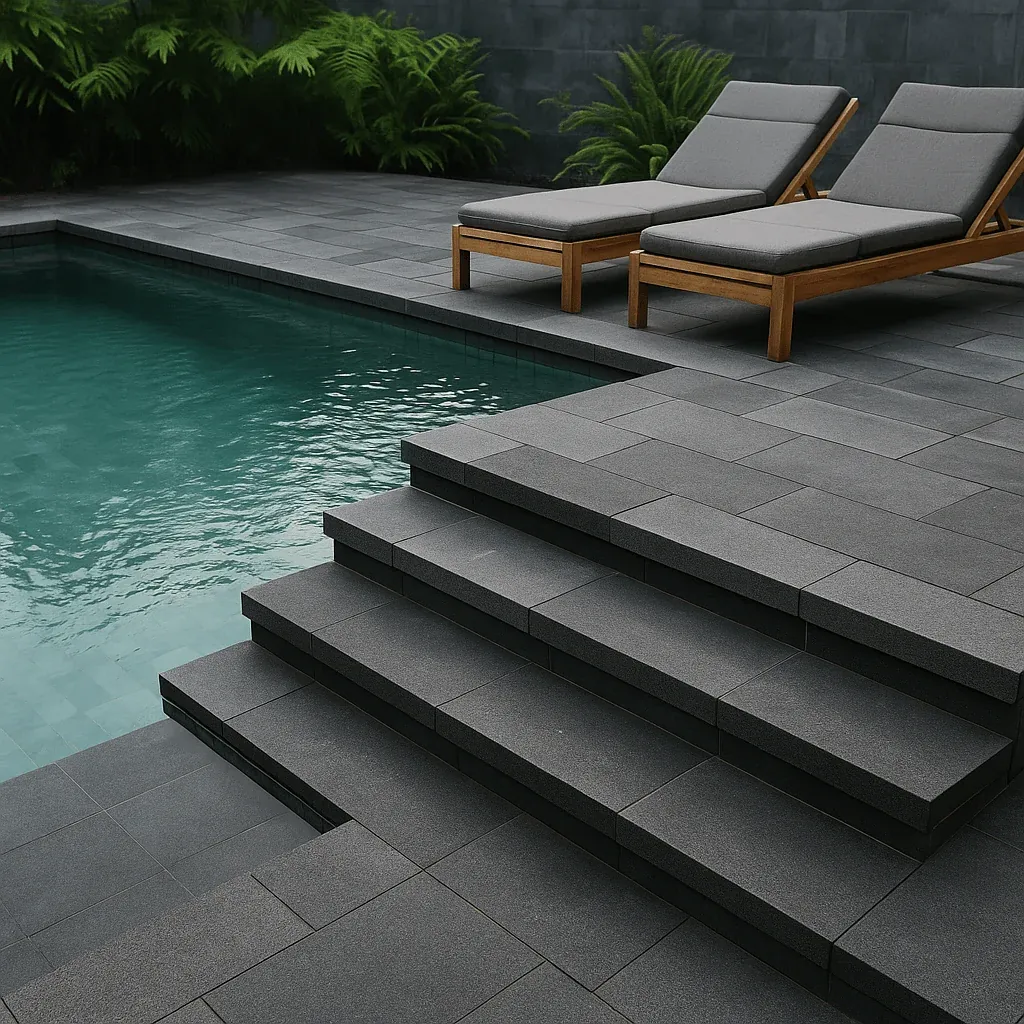
Grey volcanic stone for driveways, pavers, walkways and wall cladding.
Green marble, green granite and Sukabumi green stone look alike at a glance but are different stones. Here is how they differ.
A short glossary of honed, flamed, sawn cut, bush hammered, rough face and carved finishes.
What to look for in stone around a pool: grip when wet, finish, heat, drainage and cleaning.