Product guide
5 Green Countertops That Make a Kitchen Look Expensive
Five green countertop ideas, from deep marble veining to speckled granite, plus what to check before you buy.
Five shades of green granite, and how to judge the real slab before you commit.
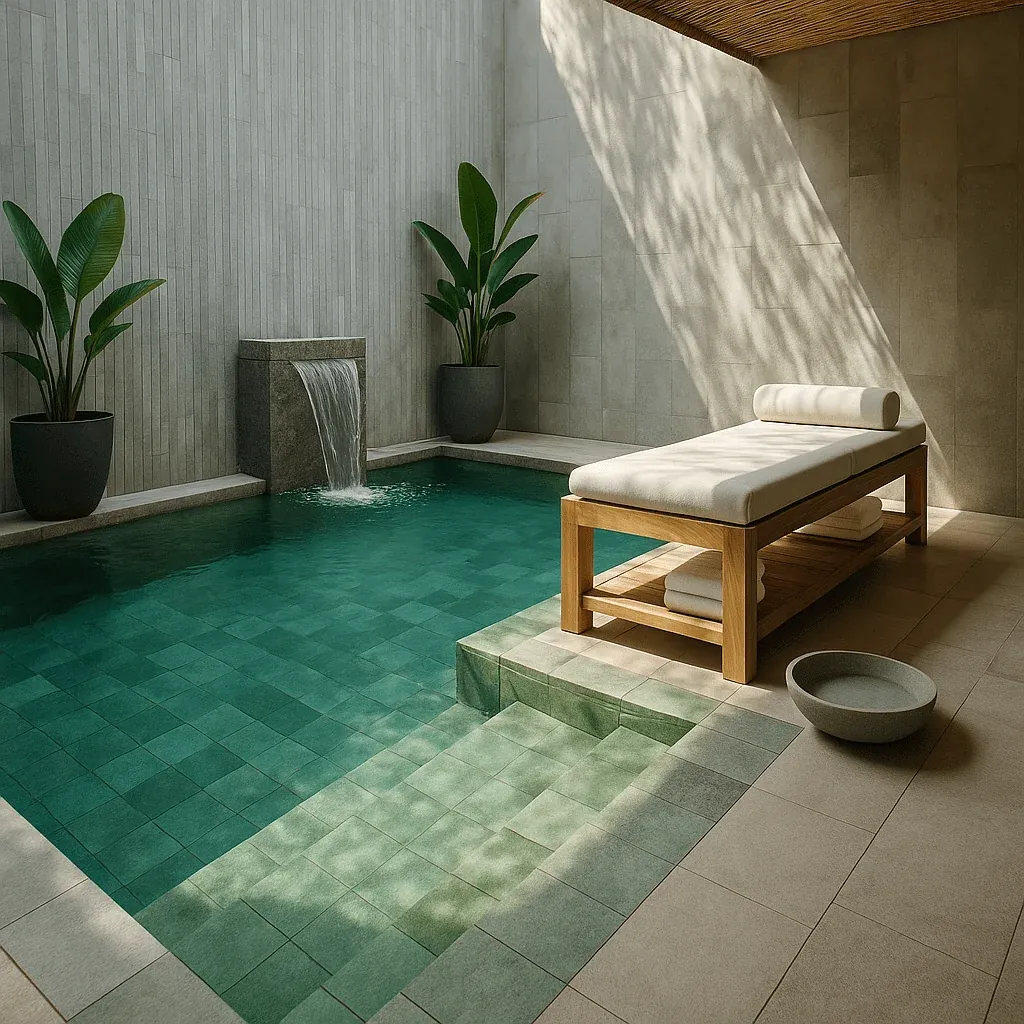
Green granite colors range from near-black forest green to pale sage, and the same stone name can look different from slab to slab. Judge the actual slab, in your own light, before you order.
Granite is a speckled igneous stone, and its colour comes from the minerals it contains. Green granite gets its tone from green minerals in the mix, which is why two slabs with the same name can look quite different.
The deepest shade is close to black in low light and clearly green in strong light. It looks strong on an island or a bar top and works well with pale walls.
Warm flecks lift the green and suit wood, brass and cream paint. This is a forgiving shade for a busy kitchen, because the pattern hides crumbs and small marks.
A cooler, greyer green suits modern rooms with steel and black fittings. Check it next to your cabinet colour, because grey-green can lean cold under white light.
Pale sage is the softest option. It keeps a room light, but it shows its pattern clearly, so ask to see a large slab photo rather than a small chip.
A mid green with dark speckle looks busy up close and calm from across the room. It is a good all-round choice if you cannot decide between light and dark.
General advice: Natural stone varies from slab to slab, so approve the exact slab before it is cut.
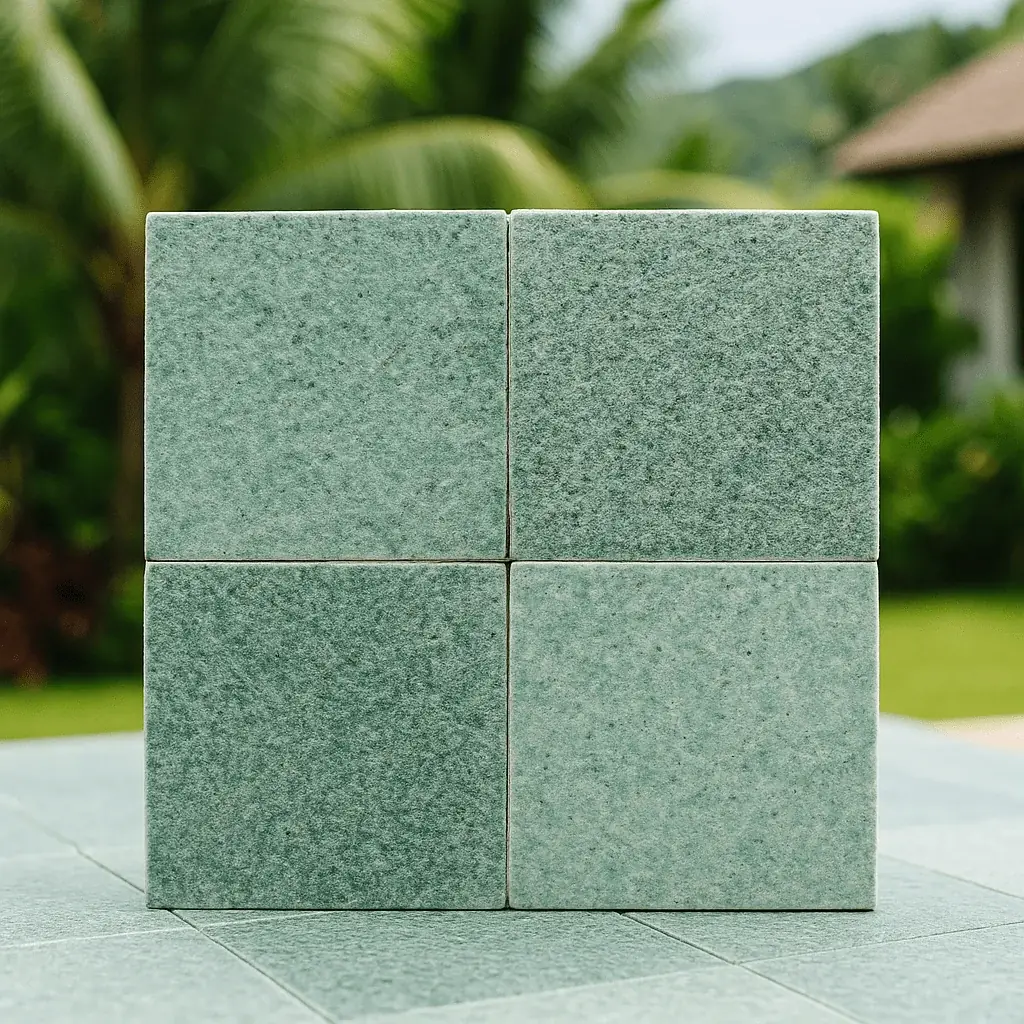
Green granite and our Sukabumi green stone are different stones. Sukabumi green stone is a quartzite (zeolite), listed in the colours Green and Crystal Green, as honed or sawn cut tiles and pavers for pools, water features, spa areas and wet areas.
See our comparison of green marble, green granite and Sukabumi green stone.
Common shades range from dark forest green to grey-green and pale sage, often with gold, brown or black flecks.
Granite is a natural stone coloured by its minerals, so each slab has its own pattern and shade.
Polished stone usually looks deeper and glossier than the same stone honed.
No. It is a quartzite (zeolite).
Factory-direct natural stone from Sukabumi, West Java, with export documents.
Quartzite (zeolite) in green shades, used for pools and wet areas.
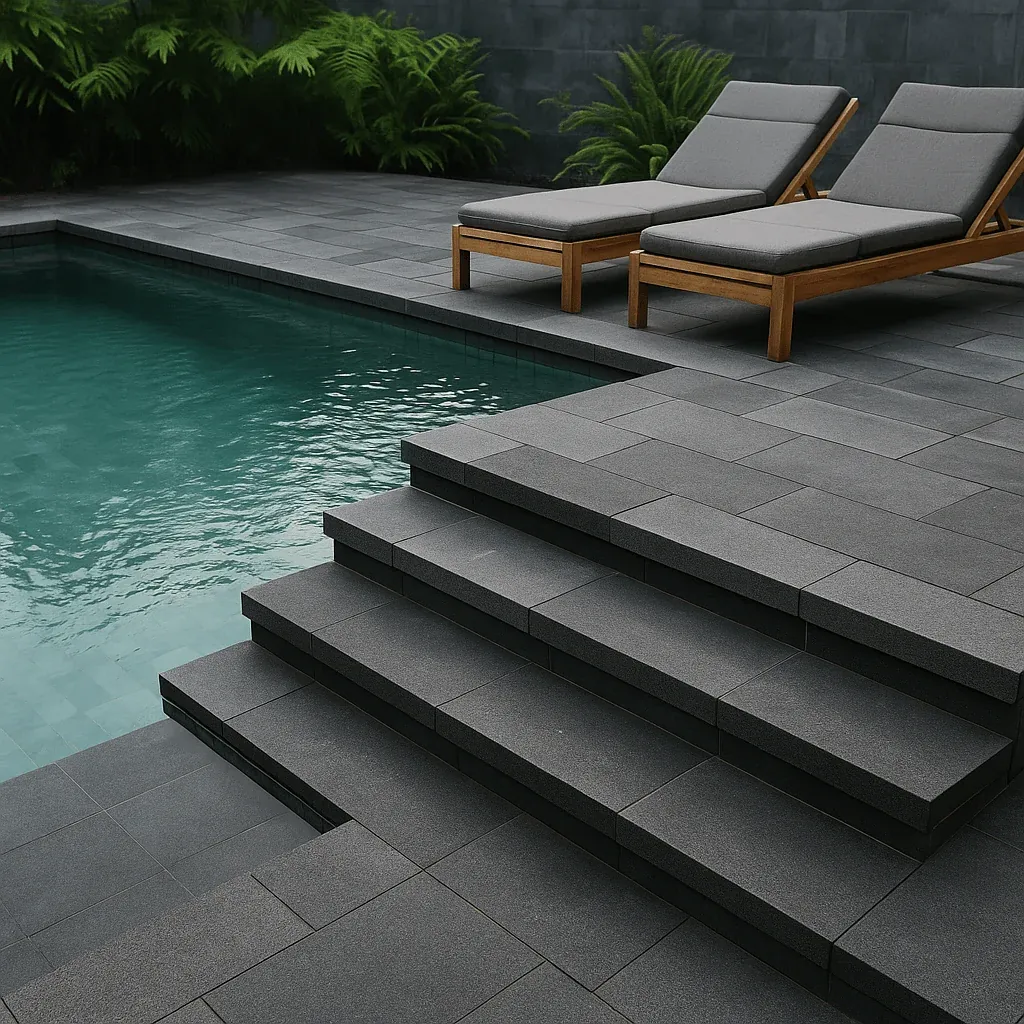
Grey volcanic stone for driveways, pavers, walkways and wall cladding.
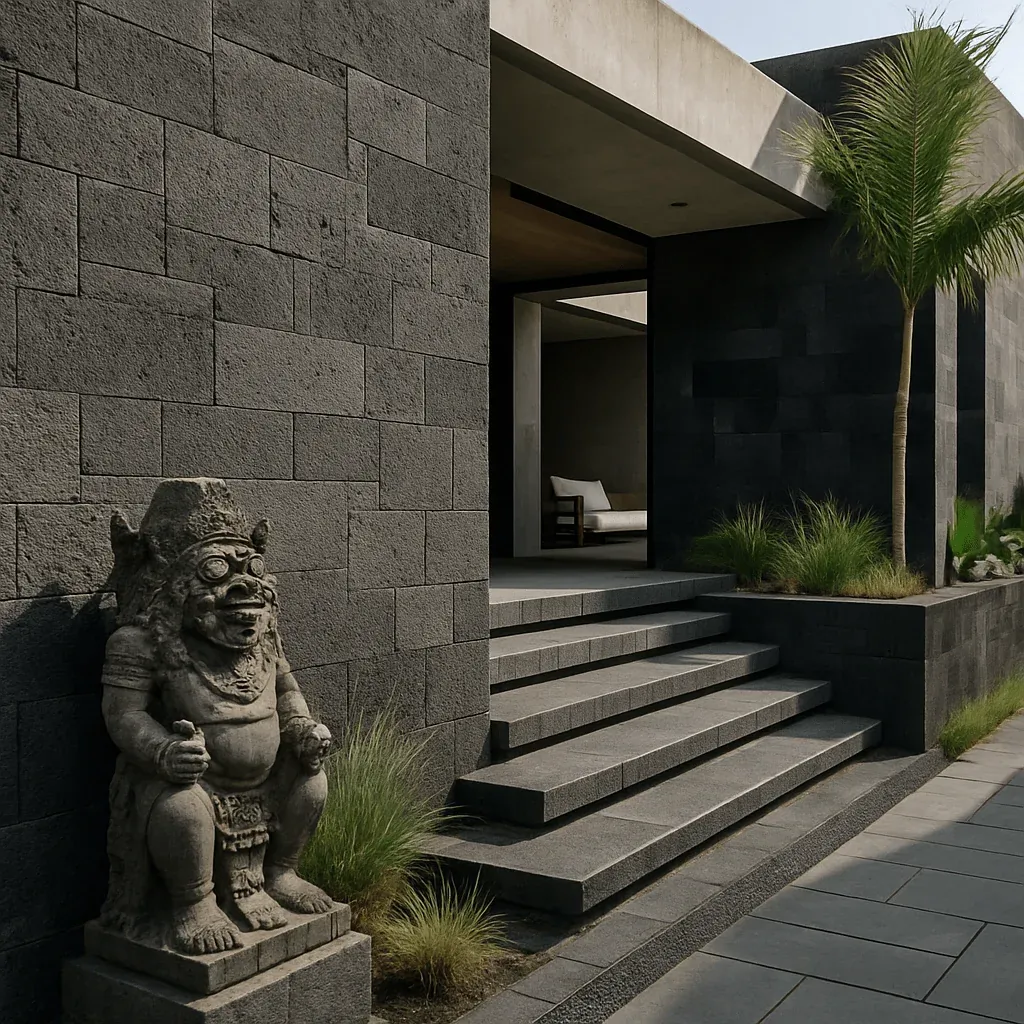
Dark basalt for pavers, wall cladding, landscaping and pool coping.
Five green countertop ideas, from deep marble veining to speckled granite, plus what to check before you buy.
Green marble, green granite and Sukabumi green stone look alike at a glance but are different stones. Here is how they differ.
Limestone is not one colour. Learn why it ranges from white and cream to yellow and grey, and what that means when you order.